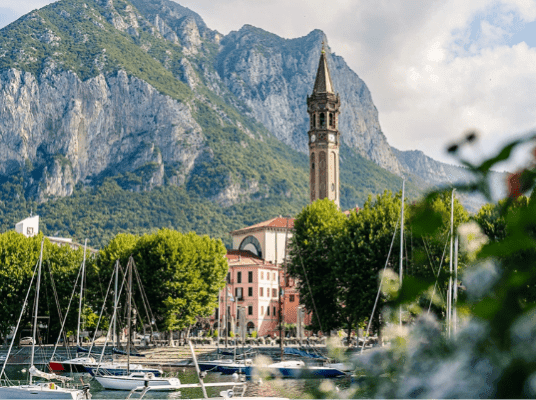
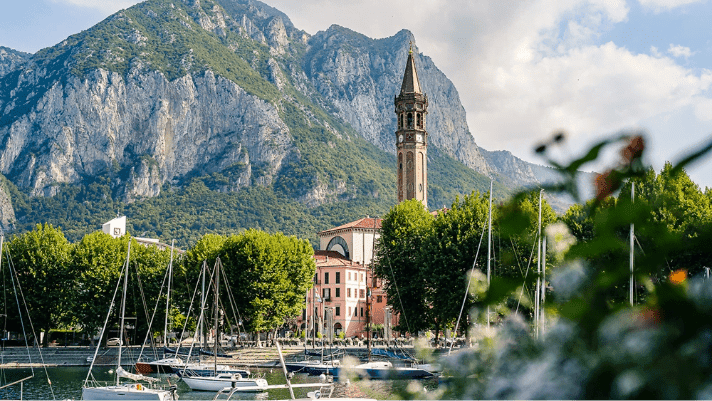
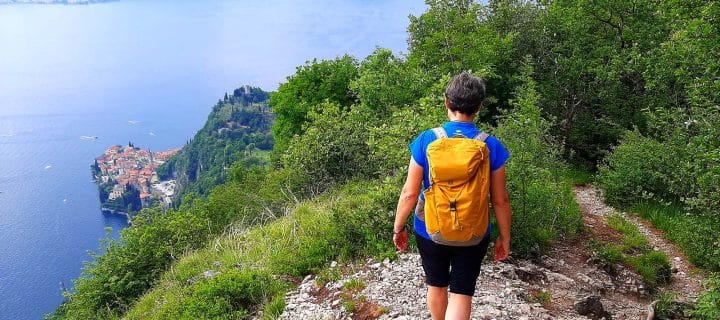
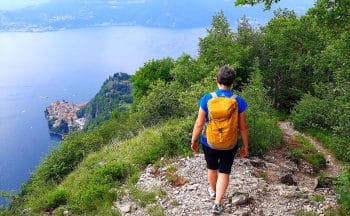
Abbadia Lariana is the perfect destination for anyone seeking adventure in the mountains, with challenging climbs leading to breathtaking viewpoints perched high above the lake. Yet it is equally inviting for those looking to escape the heat of the city, with spacious grassy beaches and shady trails leading to refreshing natural waterfalls. A haven for biodiversity, Abbadia Lariana has something for everyone: outdoor adventures, time to unwind in nature, and plenty of culture to discover in its museums, churches and medieval villages.
Settled since the Iron Age, with archaeological finds dating from the Gallic and Roman periods, Abbadia Lariana has ancient origins and owes its name to a Benedictine abbey founded in the 9th century. During the Middle Ages, it occupied a strategic position both as a hub along important communication and trade routes—now retraced by the Sentiero del Viandante, the Wayfarer’s Path—and as a strategic vantage point from which the surrounding area could be monitored and defended. One example is the medieval village of Crebbio, a historic hamlet overlooking the eastern shore of Lake Como.
A place steeped in history, blessed with a sunny setting, the clear waters of the lake and the mountains rising all around.
An unmissable example of industrial heritage, housed in a factory established in the mid-19th century to twist silk thread. The exhibition brings a chapter of the town’s history vividly to life: the silk-throwing and silk-reeling mills have been meticulously recreated, complete with original period machinery restored to working order. It feels like stepping back in time as you immerse yourself in the atmosphere of the period and discover the secrets of Lombardy’s silk industry up close.


As you walk along the lakefront, you will come across the iconic Church of San Lorenzo, built on the remains of the Benedictine abbey that gave the town its name. Nearby, you can admire the old cloister and traces of the earlier church, close to Chiesa Rotta beach and its beautiful views over the lake. Explore the surrounding hamlets and you will discover numerous churches and small votive chapels, precious reminders of the popular religious traditions of the pre-Alpine communities. Among them is the Church of San Bartolomeo in Castello, now used as an exhibition venue. Then there is the small Church of San Martino at the foot of Mount Borbino, a stop along the Sentiero del Viandante. From here, you can enjoy magnificent views over the lake and surrounding mountains, including Mount San Martino, Mount Moregallo and Corni di Canzo.
Soft grassy lawns, wide white-pebble beaches and a spectacular backdrop of mountains make Abbadia the perfect place to experience the magic of Lake Como to the full. From Pradello beach, just outside Lecco and easily reached on foot or by bicycle from the city centre, to Chiesa Rotta beach, a spacious green area leading down to a small, easily accessible stretch of shoreline, there are plenty of places to relax by the water. Right between them, in the heart of Abbadia, lies Ulisse Guzzi Park, an oasis for adults and children alike. Here you can relax in the shade of the olive trees or stretch out in the sun; the water remains shallow close to the shore, allowing children to enjoy it safely. If you prefer a more active day out, you can hire a kayak or try your hand at water sports. The park also has a beach volleyball court—because what better way to cool off after a good workout than with a refreshing swim?


Abbadia Lariana lies along the Sentiero del Viandante, the Wayfarer’s Path, a hiking route of around 60 kilometres running between the mountains and the eastern shore of Lake Como. The trail retraces and brings new life to the routes that once served as important links for travel and trade between villages, offering a slow and evocative way to explore the area among natural terraces and captivating views, vineyards and olive groves, and pastures climbing towards the mountain slopes. There is plenty more for walkers to discover. If you enjoy panoramic hikes without particular technical difficulty, you can climb Mount Borbino; a little lower down, deep in the woods, you will find the iconic Cenghen Waterfall, with its spectacular drop of more than 50 metres. If you are looking for something more exhilarating, follow the trails towards Piani Resinelli, where at an altitude of 1,200 metres you will find a delightful plateau dotted with houses and restaurants serving traditional local cuisine—the perfect place for a well-earned break after an adventure on the majestic Grignetta, a legendary natural climbing ground.
If you enjoy exploring lesser-known places and wandering through small hamlets where an authentic atmosphere still lingers, there are plenty of villages around Abbadia to discover, each with its own identity, history, customs and traditions. Among those worth visiting are Mulini, where streams once powered the waterwheels that drove the local silk industry; Borbino, where a large washhouse, still in use until the 1960s, stands opposite the little Church of Our Lady of the Snow; Linzanico, an ancient settlement with a Romanesque layout and the starting point for the trail to Cenghen Waterfall; and the picturesque medieval village of San Rocco.



Ask us, we will give you suggestions and directions to enjoy the city and the surrounding area to the fullest.
Contact us